
Saving the Bees: Salado’s Kelly Dahlseid finds her passion
By BRANDY CRUZ | Photos by BECKY STINEHOUR and courtesy of KELLY DAHLSEID

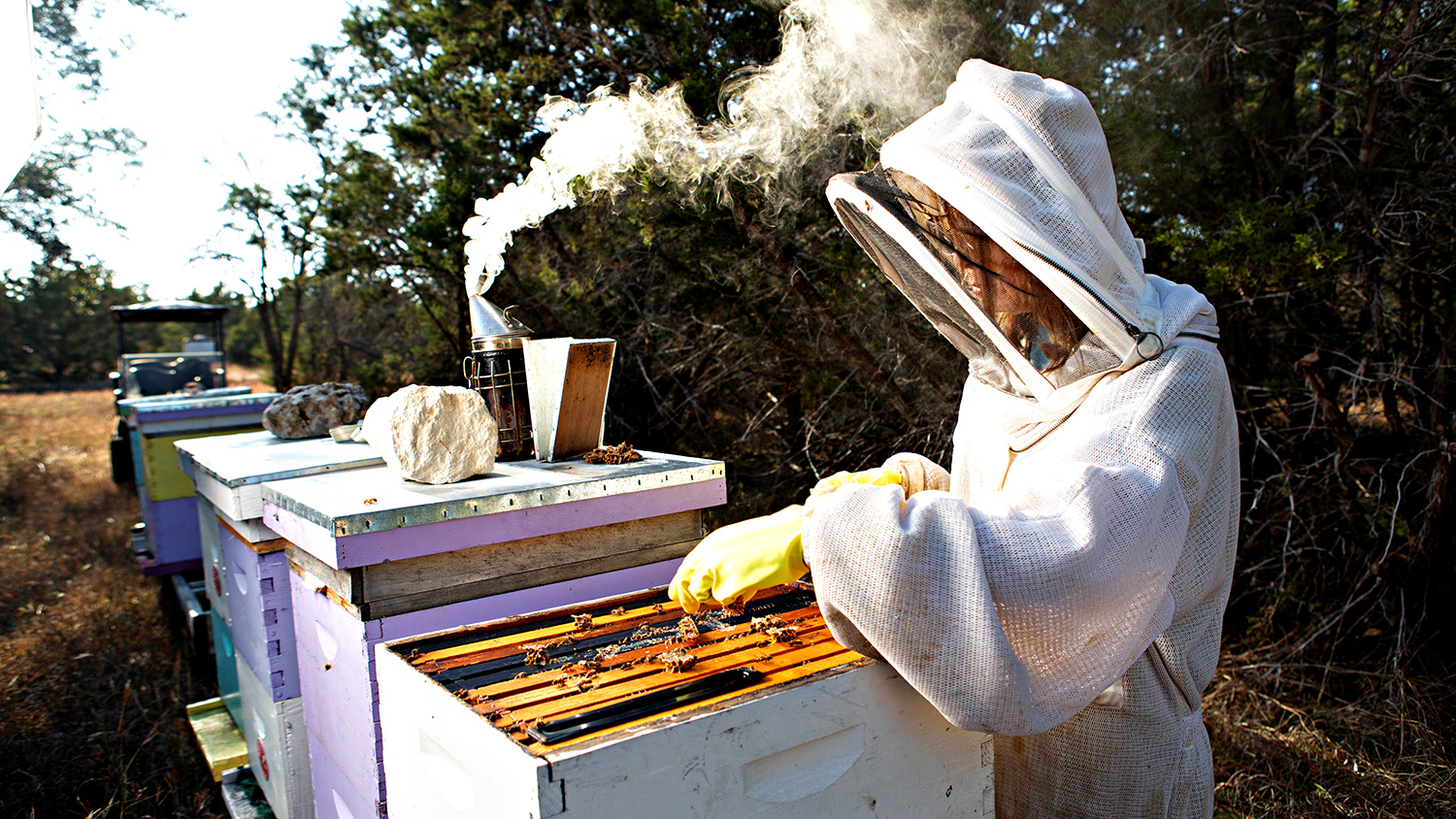
 On a warm Central Texas day, the air around Kelly Dahlseid’s farm buzzes with excitement and purpose. Thousands of honey bees move in rhythm — foraging, guarding and building — while Kelly quietly observes the colonies at work, still amazed after eight years that such tiny creatures can produce liquid gold.
“First off, I love the bees. I get such joy from just opening up a hive and watching them. I love the smell of the beeswax, the hum of the bees and the amazing end result … delicious honey,” she said. “Each hive is completely different and offers unique challenges. I enjoy the mental challenge and the problem solving.”
The Salado beekeeper said it was actually her husband, Ron, who originally wanted to raise bees. After moving from Round Rock to a farm in Salado in 2018 to enjoy the community’s small-town charm, the Dahlseids needed an agricultural exemption for their farm. Due to Ron’s background growing up on a ranch in California, he knew he didn’t want to raise goats, cows or any large animals, but was interested in beekeeping.
 After taking beekeeping classes, joining every Facebook group they could find and attending local beekeeping meetings at the Temple Area Beekeepers Club in Troy, they decided to take the plunge into the world of beekeeping.
“Everyone in the beekeeping world was so friendly and helpful when it came to learning about bees and how to be good stewards of the bees,” Kelly said. “I felt like I should have a PhD in beekeeping after all the time I spent learning and obsessing over beekeeping.”
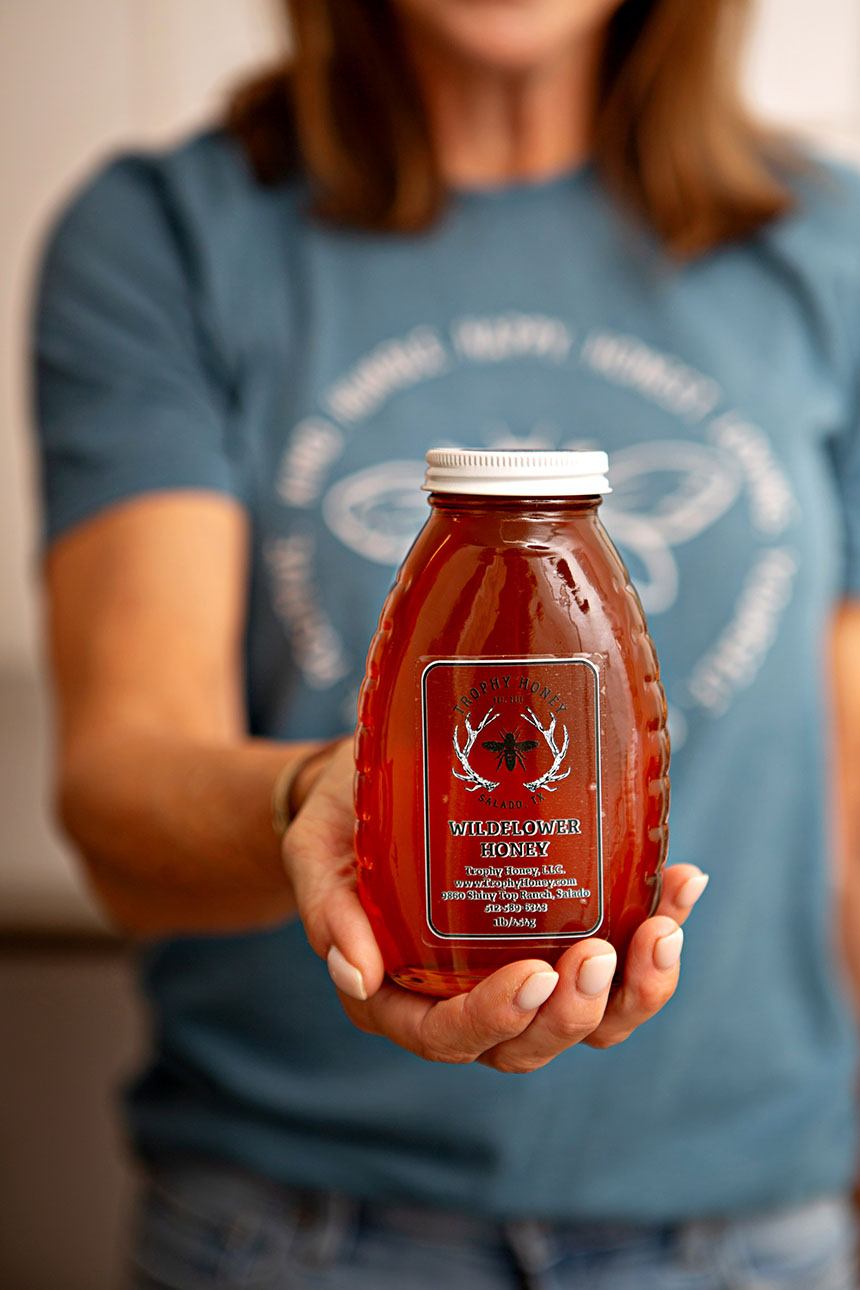
That same year, the couple formed Trophy Honey, LLC, officially launching their beekeeping venture. Starting with just eight hives, they sold their first honey harvest locally through Facebook in 2019. From there, things escalated quickly — and generously.
“We made it our mission, not only to expand our number of hives, but to save as many hives as we could,” Kelly said. She began offering free bee removals, swarm rehoming, and even water meter removals through the Temple Water Supply. “They kept me busy for years!”
At their peak, the Dahlseids managed nearly 70 hives — an impressive feat, especially while also caring for their disabled daughter and working full-time.
“Seventy hives for the two of us was too much to manage,” Kelly said. As neighbors no longer needed bees for agricultural exemptions, they scaled back to a more sustainable 35 to 40 hives. “We love managing this amount and have worked hard to build a really good stock of honey-producing hives.”
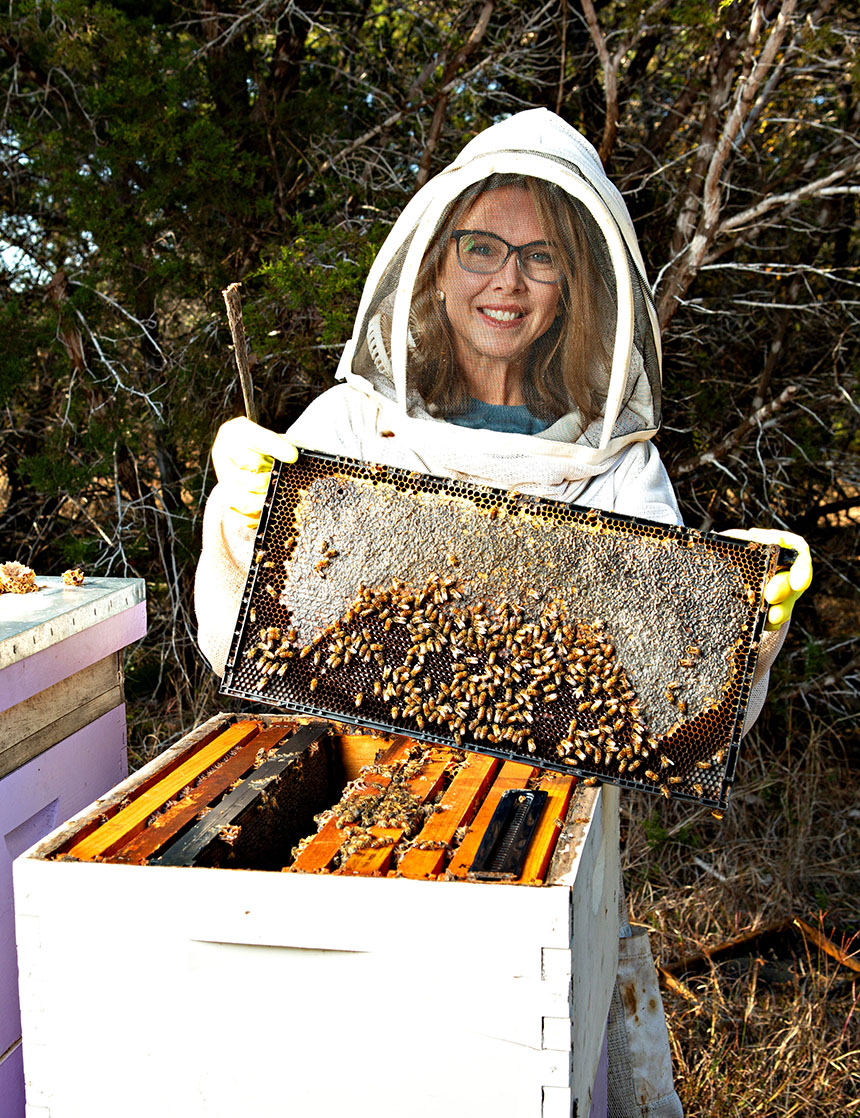
 Raising honey bees is not as easy as one would assume. She said the work is far from passive. Each hive presents its own puzzle, from monitoring food stores and space to watching for pests like the varroa destructor mite, which can devastate colonies if left unchecked.
Another fear she worries about is Africanized bees, which can be very dangerous and aggressive. She said they will try to enter a beekeeper’s protective suit. Lucky for her, she hasn’t encountered any yet, just some “very spicy bees.”
“I always check my bee suit for rips in my veil. They love to go for your face and can find the smallest hole to get in, so I make sure I’m zipped up good! I learned from my mentor when I first started to ‘trust my suit’ so I definitely remind myself of this when I encounter pretty spicy bees,” she said. “It’s my own fault when I have bees get into my suit. I either didn’t zip up or didn’t see a tear in my veil. You can get complacent and make mistakes. They sure hurt when you do. I once had 15 stings to my head and face because of a tear in my veil.
She also worries about other people’s safety. She said people are curious and want to come see what she’s doing. Generally the bees don’t bother anyone nearby, but you just never know when it could happen.
One thing she said she always advises people about bees is to not kill or spray them with anything. If a nest is found, the best thing to do is to take a picture of the hive from a safe distance and contact a local beekeeper to see if they can remove it.
“It’s heartbreaking when I go to do a removal and the bees have been sprayed. The queen is usually dead and most of the bees,” she said. “The survivors are just wandering around without a hive and there is nothing we can do at that point to round up the bees that didn’t die. It’s so sad to see.”
Kelly describes bee removals as both exciting and challenging. It can sometimes be difficult to find the queen and without her, the other bees will not follow.
“You have to be very surgical in that you want to be careful not to kill the queen as you are cutting away comb. The queen loves to hide in the comb where it’s dark. If it’s a hive that has recently swarmed, she can even fly up and away and land on something nearby. It can be a very tedious process, cutting away each piece of comb and carefully looking for her and shaking the bees into their new home, your box,” she said. “Once the queen has been located, she is put in a queen clip, which looks kind of like a hair clip, and the bees will follow her pheromones and join her in the hive. I typically leave the queen and new hive box overnight so all the bees that are out flying and foraging will join her in the box overnight and not be left behind. Beekeepers hate to leave stranded bees.”
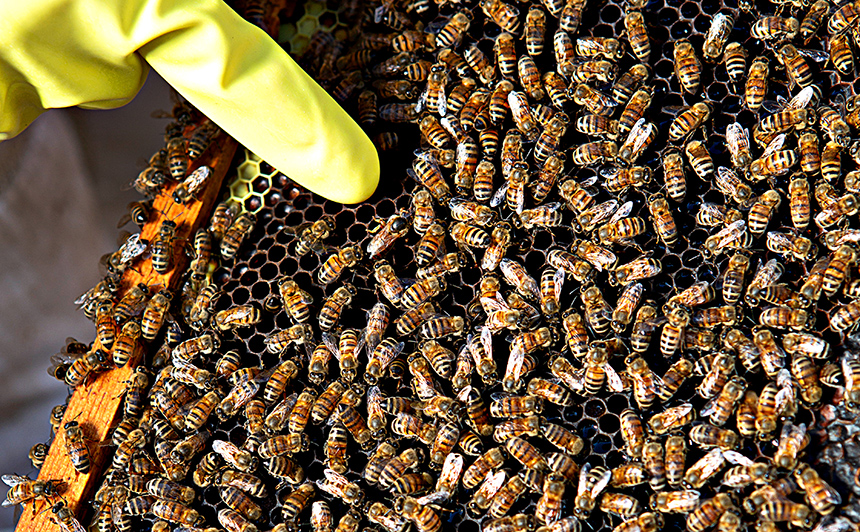 “Beekeeping is constant problem-solving,” Kelly added. “The hives need different attention at different times throughout the year. We try to always enter the hive with a purpose, so we don’t interrupt the bees unnecessarily.”
While they once sold honey at the Salado Farmers Market at Barrow Brewing, their busy schedules no longer allowed for the weekly market. Today, Trophy Honey can be found at The Shoppes on Main in Salado. Still, Kelly cherishes the memories of sharing her passion face-to-face at the market.
“We loved educating adults and children about bees,” she said. “That connection meant everything.”
Beyond the honey, beyond the removals, she sees education as one of the most important parts of her work. Every conversation and every rescued swarm is an opportunity to shift how people view bees — not as a threat, but as an essential part of the ecosystem.
After finding her home nestled in the heart of Texas, Kelly also found a calling that blends purpose, patience, and a deep respect for the natural world. In the gentle hum of her hives, she’s building something lasting — one bee, one bloom, and one jar of honey at a time.