1st Cavalry Division Horse Cavalry Detachment Riding Through History
By RACHEL STRICKLAND | Photos by BECKY STINEHOUR and courtesy of 1st CAVALRY DIVISION
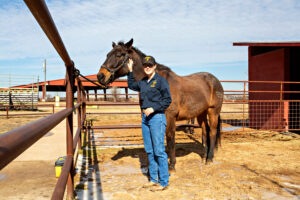
In the age of drones, satellites and advanced military technology, the thunder of hoofbeats across a Texas field might seem like something from another era, but at Fort Hood, history is still very much alive.
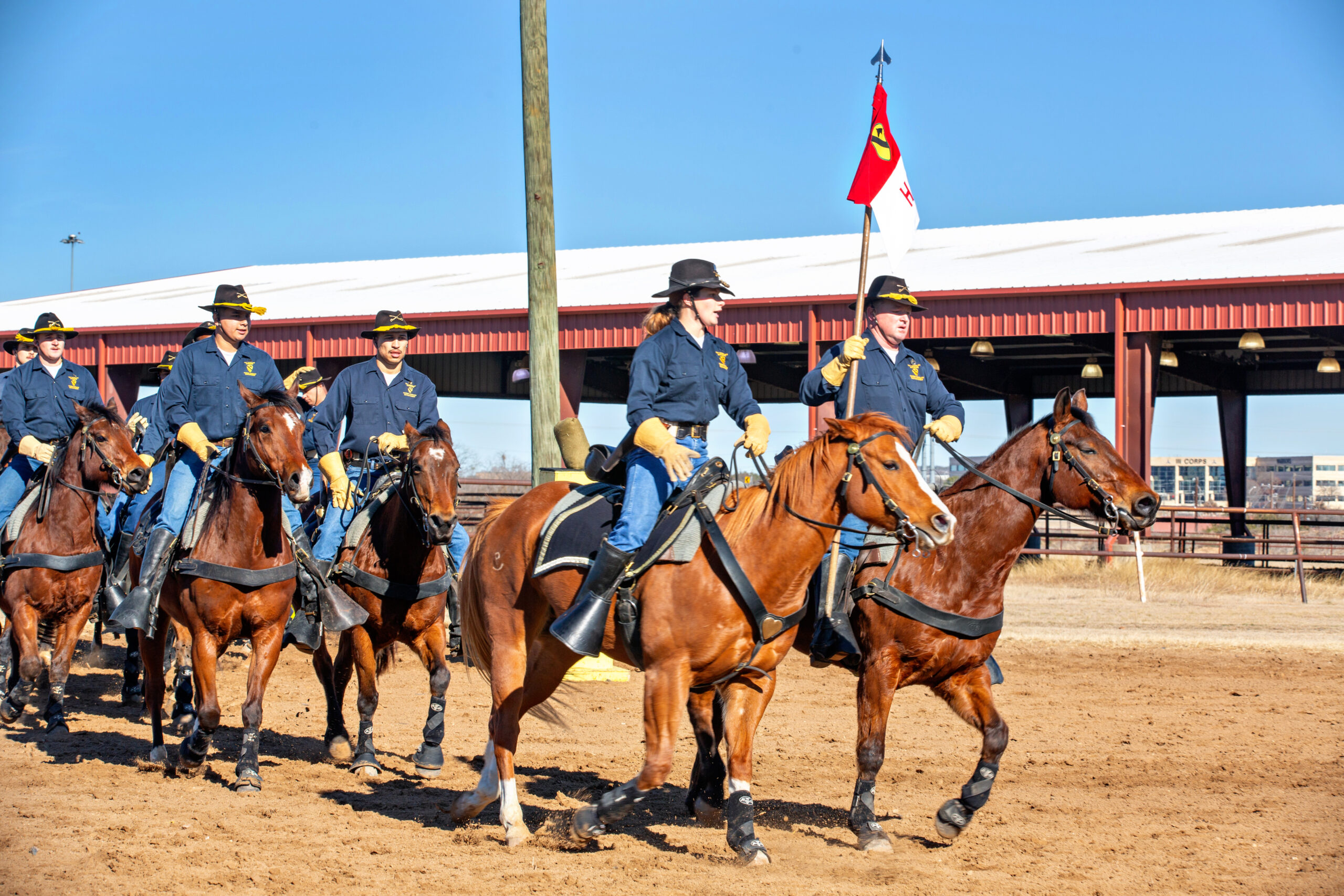
The 1st Cavalry Division Horse Cavalry Detachment serves as one of the last mounted units in the United States Army — a living tribute to the soldiers, horses and traditions that helped shape American military history. Dressed in period uniforms and riding with remarkable precision, the detachment preserves the proud legacy of the cavalry while educating new generations about the Army’s past.
The roots of the cavalry run deep in American history. The United States’ mounted Cavalry was active from 1775 to 1942 in various forms.
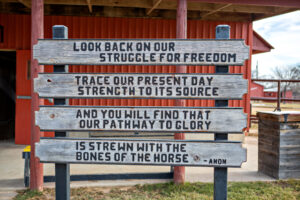
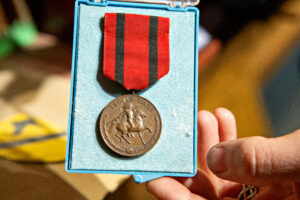
Long before tanks and helicopters dominated the battlefield, mounted soldiers served as scouts, messengers and frontline fighters. Horses provided mobility, speed and a tactical advantage in some of the nation’s most defining conflicts. The famous 1st Cavalry Division was formed at Fort Bliss in 1921, mainly patrolling the United States-Mexico border, but by the 1940s, technology had advanced, and the Army no longer used horse-mounted troopers. The last official horse-mounted cavalry charge took place in the Philippines in 1942. Now the only horse-mounted cavalry charges take place during official ceremonies.
Fort Hood’s 1st Cavalry Division is now the only active cavalry division in the Army today and also has one of two active duty horse detachments. Established in 1972, the 1st Cavalry Division Horse Cavalry Detachment’s mission is to preserve the history of the 1800s cavalry while performing in ceremonies, parades and demonstrations while showcasing authentic horsemanship and military tactics from the 1800s.
 When not performing these duties, the detachment troopers care for the horses.
“It’s great to be part of a select unit of such historical precedence,” Capt. Megan Korpiel, commander of the detachment, shared. “More than that, though, I get to come to work and be part of a team with some of the best soldiers in the Army.”
Korpiel said she does not take her role lightly. As the commander of one of only four horse cavalry regiments in the Army — two active duty and two used for just funeral details — she is proud of the work they do with the horses. Originally from Canandaigua, New York, she has been in the United States Army for just over four and a half years, the Army captain has been with the detachment for about nine months and doesn’t take her role as the commander lightly.
“Being part of the team that integrates some of the top Army leaders, veterinarians and cavalry subject matter experts, all while being in the public eye, is an unmatched learning experience,” she said.
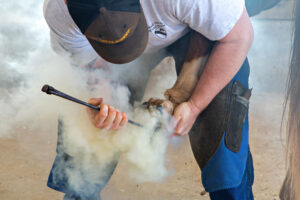
She is especially proud of the valuable skills her team learns, from maintenance, farrier, and leatherworking to horsemanship and leadership.
“This unit provides our soldiers the opportunity to grow outside of their military occupational specialty and practice a new craft every day.”
Korpiel’s favorite thing about working with horses is that they can’t lie.
“Their emotions are often direct reflections of their handler’s emotions,” she explained. “While each animal has their own personality, their sensitivity and reaction to their environment is often a reflection of their rider’s reaction.”
Korpiel came into the position knowing quite a bit about horses, but she quickly found out that she had a lot left to learn when it came to the personnel and herd management part of the job. Working in the detachment takes a lot of grit, and Korpiel says that the soldiers under her command are among the hardest-working people she’s led.
“It may seem like a vacation to people on the outside looking in. However, for anyone who has trained an animal or worked on a farm, you know the amount of work, patience and dedication to detail that is required to run a top-notch facility.”
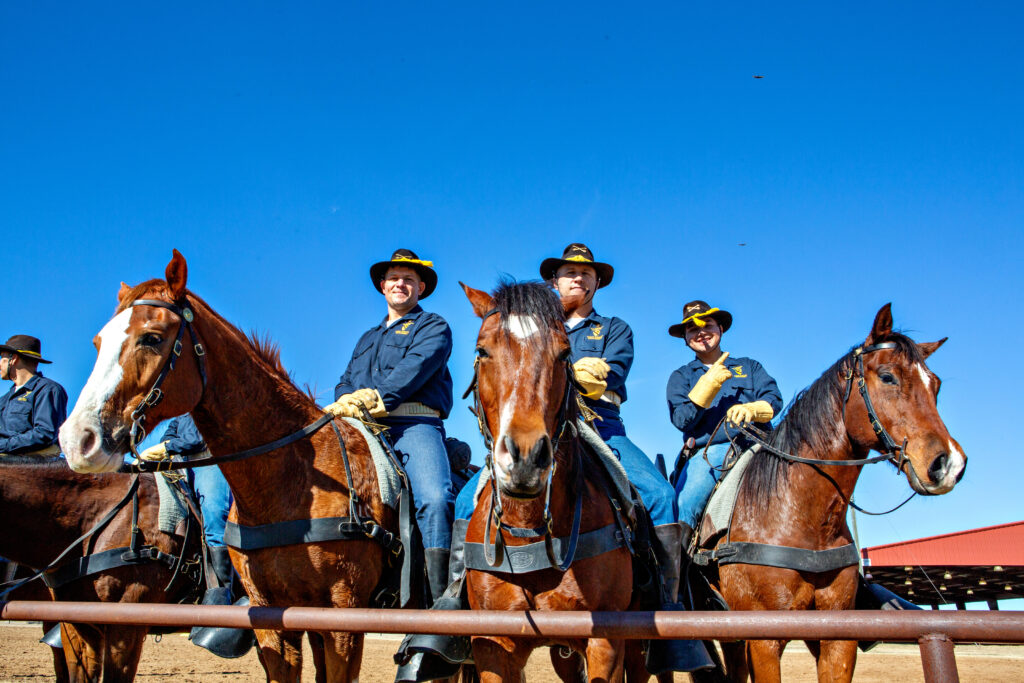
The question as to whether the Army would keep any of its equestrian units was uncertain for a while, which was cause for great stress among the troopers. Korpiel says that while they knew they’d remain Army soldiers, they weren’t sure what their next assignment would be. When the Army announced in July 2025 that Fort Hood and Fort Riley, Kansas, would be able to keep their horse detachments, the troopers in the unit were able to breathe a sigh of relief.
“Announcing that soldiers could keep their jobs and continue doing what they loved makes a difference,” she says. “These troopers work hard to maintain the legacy of the mounted cavalry and take pride in that.”
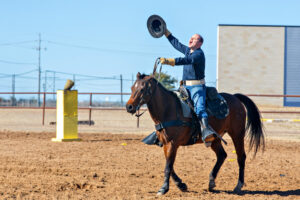 Every week, the detachment offers a demonstration that is open to the public. The weekly demonstration shows audiences the skills that horse-mounted cavalrymen have used for more than 200 years, from saber and firearm skills to jumping and roping. For many veterans and military families, the detachment represents a connection to tradition and service that spans generations.
As much fun as the troopers have during the demonstrations, children watching from the sidelines often leave inspired, eyes wide as riders in blue uniforms gallop past carrying cavalry guidons beneath the Texas sky. Adults, meanwhile, are reminded that history is not confined to textbooks or museums — sometimes it rides right in front of you.
“It’s amazing,” Korpiel says. “It’s really hard to have a bad day when your job is to make people smile!”
Spc. Ahmad Ali Harakeh, a native Texan from Port Neches, has been in the Army since early February 2023 and has been part of the 1st Cavalry Division since September 2024. He works in maintenance, where they tend to the lawn and horse stalls. He says they keep the detachment areas safe, clean and presentable.
“We help make sure the horses have a safe and comfortable place to stay, and we help take care of the facility,” he says.
“If something is broken, we fix it.”
But like everyone else in the cavalry detachment, they also care for, train and ride the horses.
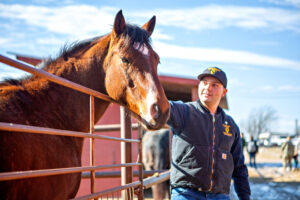
Harakeh didn’t grow up around horses, but after joining the Army, he learned to ride, and it has quickly become something that he truly enjoys. He finds working with the horses to be therapeutic, and he takes pride in caring for them and ensuring they’re as happy, healthy, and comfortable as they can be.
“It has become something meaningful to me, and one day after the Army, I aim to own some land and a few horses,” he says.
Harakeh is part of the ground crew during the weekly demonstrations. He helps to ensure the riders’ and horses’ safety, which means using dummy stands on the demonstration course, supporting the riders and horses, keeping the crowd engaged, and firing the cannon.
“The Horse Cavalry Detachment is a unique part of the Army,” Harakeh says. “We do more than just care for horses and conduct demonstrations. We also support barn tours and visits for soldiers, families, field trips and other groups. During barn tours, we show people the horses and our facilities, explain what we do on a day-to-day basis, and talk about the mission of the detachment. It gives people the chance to learn something unique about the Army and meet the horses up close. It is a good way to connect the public with Army history and a mission they may not get to see anywhere else.”
The 1st Cavalry Division Horse Cavalry Detachment’s facility is located at 69007 Trooper Loop, and it’s open to the public every day from 9 a.m. to 5 p.m. for barn tours. Every Thursday at 10 a.m., they host a mounted cavalry demonstration, weather permitting. For more information or to request the regiment at your event, reach out to the 1st Cavalry Division Public Affairs Office online at https://forthoodmediacenter.com/submit-your-question-here.