Harvesting Thankfulness
Reflections from a visit to Plymouth Rock
Story and photos by TONYA WARREN
 Sweltering in the summer of 2023 made me long for cool nights and shorter days. I especially wanted to unload my boxes of Thanksgiving decorations to get ready for my favorite holiday. Thanksgiving is that tender unassuming holiday falling between candy-crazed Halloween and the sometimes-in-your-face festivities of Christmas.
Our kids, one in Montana, and the other in Oklahoma, broke the news early fall that year that they wouldn’t be home for Thanksgiving. One stayed behind for graduate school responsibilities and the other decided his girlfriend’s family would have a few more tasty dishes on their buffet table than what he’d have at home.
After licking self-imposed wounds for a few days, I excitedly made the executive decision that my husband and I would spend Turkey Day in the land where it began in 1620. Granted, this trip was a bit more than what my Thanksgiving week HEB receipt would reveal, but I echoed the old credit card commercial sentiment, “For everything else, there’s Mastercard.” Indeed, I gave that card a workout, but it was more than worth it to make priceless memories in such an awe-inspiring place.
 Landing in Boston several days before Thanksgiving, we enjoyed sights of the coastal historic city. The Freedom Trail highlights 16 fun points of interest from Boston’s early colonial days. The Old State House, the statue of portly Benjamin Franklin, Old Corner Bookstore and many other points dot the lively area. Don’t miss visiting Paul Revere’s actual home where his eyeglasses, rocking chair and saddle are on display. I was taken aback at how much of a petite man he must have been. He just carried a big message on that fateful night. Oh, to have been there when Revere was riding furiously through those darkened streets and warning colonists the British were coming! Fun fact: Revere was a coppersmith, and today, you can still purchase Revere Ware pots and pans.
Over the next few days, we spent copious amounts of time savoring seafood freshly plucked from the icy Atlantic just hours before. Touring MIT and taking in the beauty of Harvard gave us a better appreciation of these historical institutions and their contributions to the science world and more.
Too excited to sleep well the night before Thanksgiving, I thought about what the next day would bring in Plymouth Rock. Eventually the steady rain pelting our hotel window and well-behaved drivers at the intersection below lulled me to sleep.
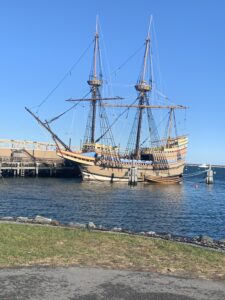
Thanksgiving morning was cold but bright as we headed to Plymouth Rock. Imagine our excitement when we first laid eyes on Mayflower II.
 Maritime records were lost on the original ship of 1620, but her replica was built in Plymouth, England, and she sailed her maiden voyage to America in 1957. Docked in cold Atlantic waters, visitors from all over stand in awe of her beauty. Fun facts: Mayflower II is Coast Guard certified, and she still sails on special occasions.
Across the street stands the statue of the great Wampanoag chief, Massasoit. Erected in 1921, the statue serves as a reminder of the pivotal role his tribe played in teaching early settlers how to live and thrive in their new country. Every Thanksgiving morning, a group of peaceful protesters gather at the statue as a somber reminder that colonialism came with a heavy price to Native Americans.
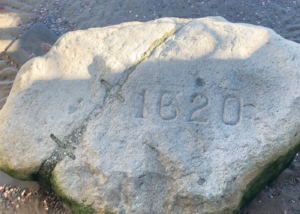
Across the street from Massasoit is a Romanesque style temple housing Plymouth Rock. A bit of a misnomer, the rock, half buried in sand, is really a small boulder. For several hundred years after the pilgrim’s arrival, there was debate as to whether this area was the exact spot the pilgrims first touched American soil. Originally planning to land in New York’s Hudson Bay area, a violent storm threw them off course. This small boulder remains an endearing symbol of brave people who were pursuing religious freedom at all costs.
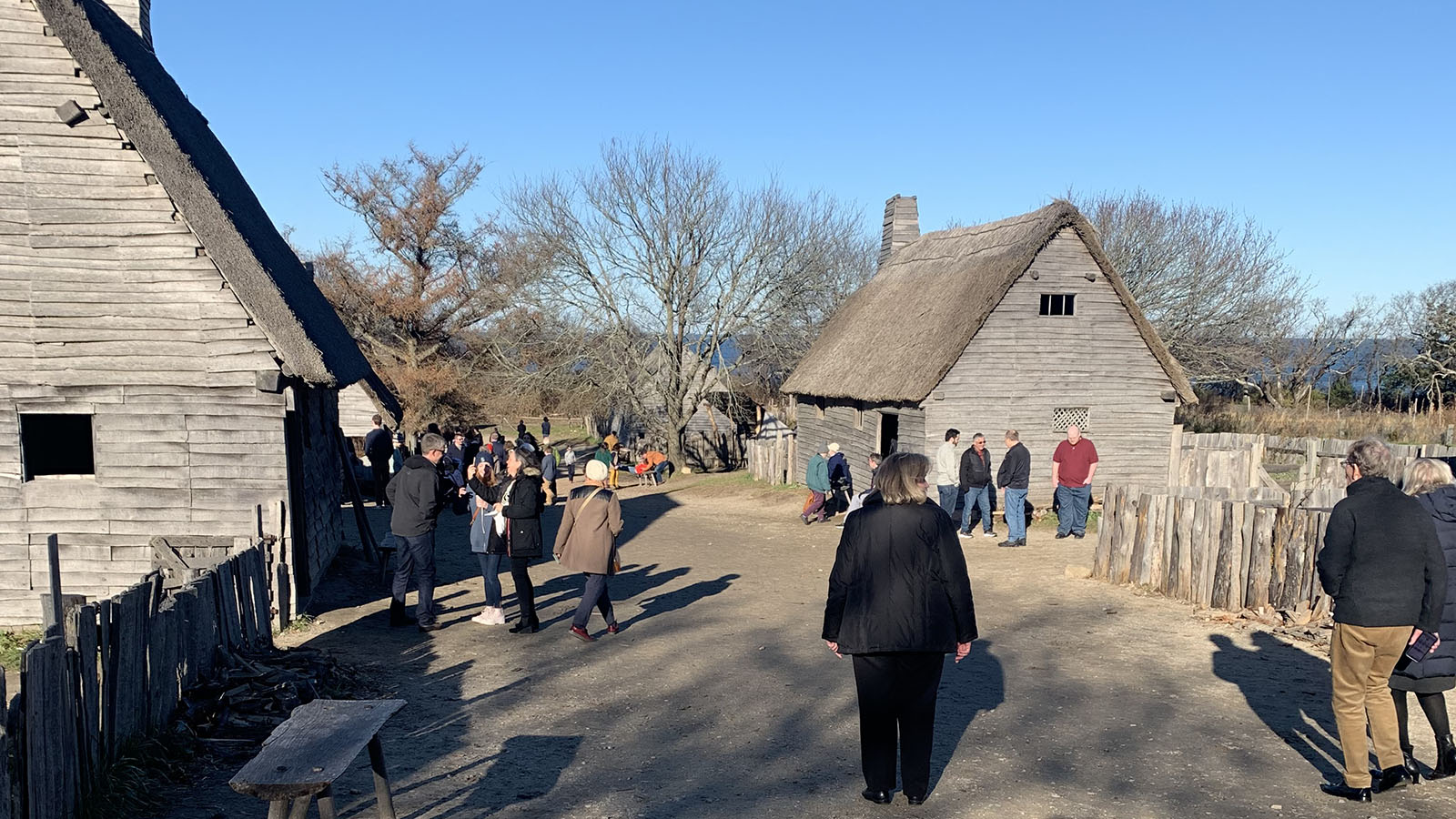
Next stop: Plimoth Patuxet Museum. Note the old English spelling of Plimoth, which was later changed to the current day spelling of Plymouth. Patuxet was the name given to the area thousands of years prior by the Wampanoag tribe. Boston blue blood Henry Hornblower II is credited with making his childhood dream reality when he established the museum in 1947.
Every Thanksgiving Day, the museum hosts a special holiday meal for guests who have registered and paid online. Set in the museum’s dining hall, “The Story of Thanksgiving” experience offers a plated meal with entertainment from local historical performers. Guests enjoy centuries-old hymns and psalms while feasting on traditional New England fare such as roasted pork and fish, Indian corn pudding, savory stewed cabbage and more.
Another dining option is a buffet of more traditional Thanksgiving foods such as roasted turkey, dressing and sweet potatoes. Communal seating is enjoyed at either meal, and it was fun to meet other folks from across the country or across town. Our table included another family of Thanksgiving enthusiasts from Pennsylvania and a couple who lived up the road who made the meal their annual Thanksgiving tradition.
Pleasant and interesting conversation in a relaxing setting made for a memorable holiday experience.
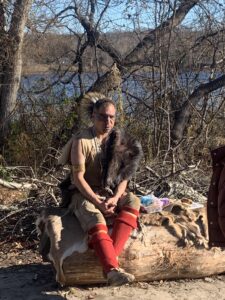 Just steps from the dining hall, you suddenly immerse yourself in daily life, centuries before, with “colonists” and actual Wampanoag tribe members. We were encouraged to make conversation with all we encountered. Dressed in deerskin clothing, a wolf rug at his feet and feathers in his hair, a gentleman explained how a canoe-like structure was fashioned out of a hollowed tree. Nearby, a woman was smoking a chicken over an open-pit fire.
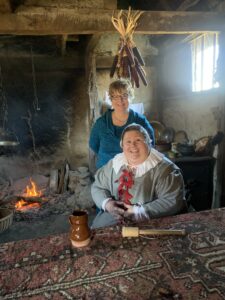
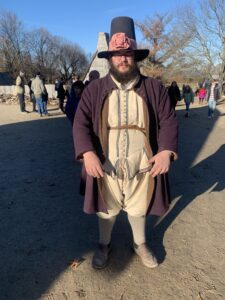
Also, in the 17th century village, locals dressed in period clothing went about usual chores. One lady shared a Bible story to some attentive guests. Another young woman hoed her garden, while Elder Brewster went around checking on his neighbors. It was very impressive that they did not break character, even when I asked to take a selfie with a young woman.
 Do not miss the gift shop if you’re a Thanksgiving aficionado. Local handmade native pottery and beautiful jewelry were available, along with books on Native Americans, Pilgrims and more. Beautiful postcards and other pieces of artwork were also tempting. I treated myself to a locally made traditionally dressed Wampanoag doll.
For me, this delightful trip highlighted the beauty of Thanksgiving. New Hampshire-born Sarah Hale, an author who was concerned over the Civil War’s death and destruction, encouraged President Abraham Lincoln to make Thanksgiving a national holiday. After a few hiccups along the way in recognizing the national importance of such a day, in 1941 Congress passed a measure to celebrate Thanksgiving on the fourth Thursday of November.
Thanksgiving is more than just about football and food. It’s a special time for reflection of all we’ve been given personally and collectively as a nation. Cultivating a daily habit of being thankful is beneficial to us all. Put away differences over politics, race, religion and other subjects that tend to divide instead of uniting us. The pilgrims came seeking a new way of life, cultivating and living a life of thankfulness, just as we all should.