
Surgeons at McLane Children’s save boy’s foot
By AMY ROGNLIE | Photos by Becky Stinehour and courtesy of the Delukie family
“There comes a point when you have to make a decision — life over limb,” said Dr. Hayden Stagg, pediatric surgeon at Baylor Scott & White McLane Children’s Medical Center in Temple. “It’s not an easy decision to make, but we were very close to having to make that decision in Brigg’s case.”
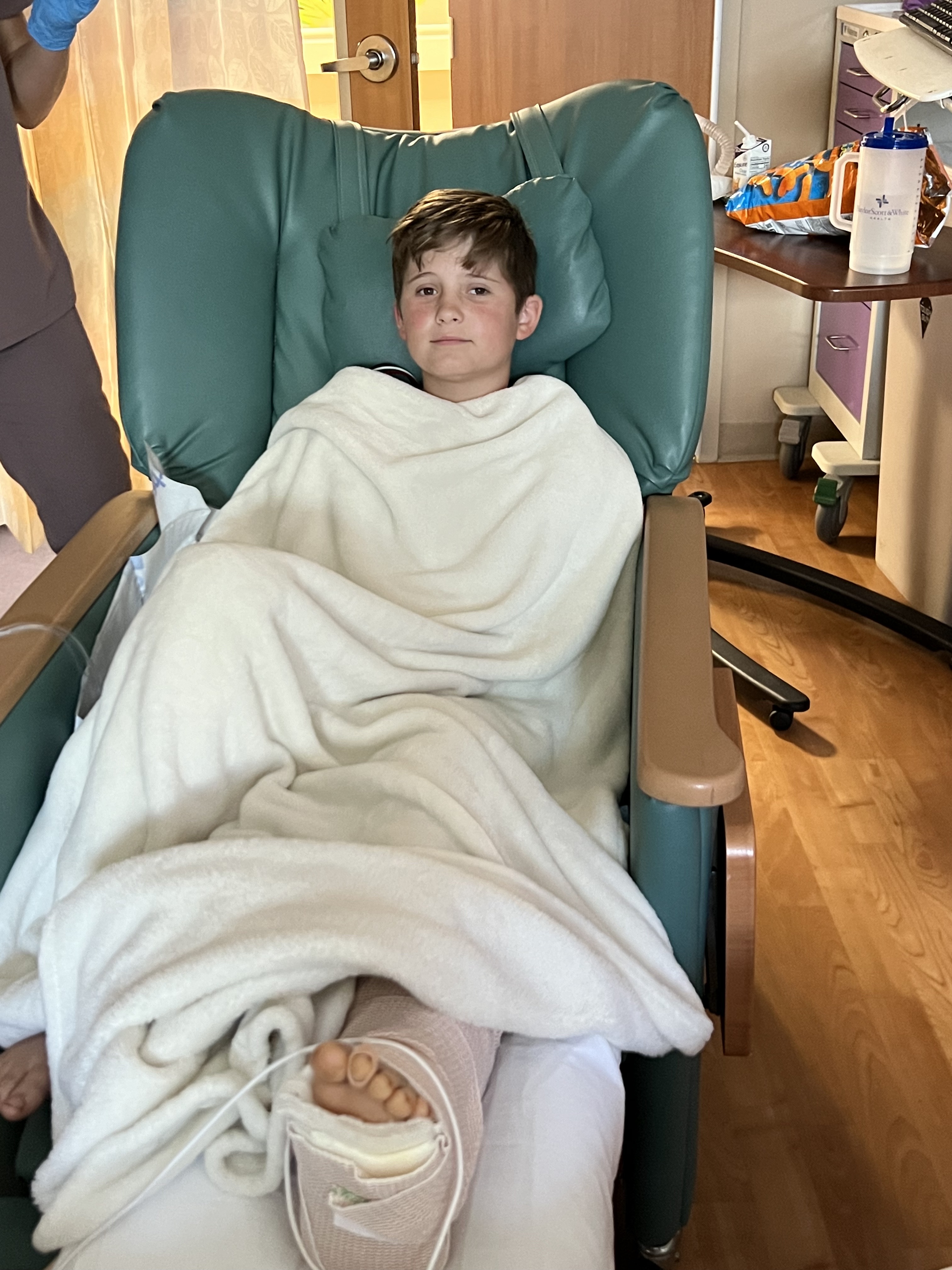
 Last June, 12-year-old Brigg Delukie and his 8-year-old brother were riding an ATV on their grandparent’s farm. As Brigg drove, a tie rod suddenly broke, causing the vehicle to flip over on the side of the road. While the boys extricated themselves, Brigg realized he could not stand up and sent his little brother to run back a half mile to their grandparents’ house for help. Somehow, they got him into the car and headed to the hospital.
Brigg’s mom, Dr. Ali Delukie, was at work at BSWH’s OB/GYN clinic near McLane when she got the call that Brigg had broken his leg.
“I talked to him while they were on the way to the hospital and Brigg said, ‘It’s bad, Mom. And my foot is numb.’ I said, ‘It’s a broken leg. You’ll be fine.’ Honestly, I thought it was really bad timing to have to deal with a broken leg when we were supposed to go on vacation in a couple of days.”
Little did she know that Brigg’s injury was far more serious than an open fracture. After spending 15 minutes in a trauma bay, he was rushed into surgery for a lacerated artery.
“Most people have three arteries leading to their foot,” Stagg said. “Unbeknownst to anyone previously, Brigg has a vascular anomaly. He only has one vessel leading to his foot, so when we didn’t get any pulse beyond the fracture, we immediately realized that this was a much higher level of trauma than we had expected.”
According to the pediatric surgeon, children’s blood vessels are quite reactive, meaning that the vessel will clamp down to stop the blood flow. It can then be difficult to achieve adequate blood flow through the artery. In Brigg’s case, it took several hours to reattach the blood vessel and repair the fracture, while also dealing with significant soft tissue damage and bleeding. At last, the surgeons were satisfied that they had gotten good blood flow through the repaired artery. After 12 hours in the operating room, Brigg was finally transferred to ICU.
“The doctors were pretty vague at that point about what might happen next,” Ali said. “But I think it was then that it dawned on us that our son could lose his leg.”
The doctor decided to check the pulse in Brigg’s leg one more time before he left him to get settled in the ICU. Unfortunately, there was again no pulse, which meant Brigg would have to return to surgery. That’s when Stagg had an epiphany.
“The vascular surgeon was at the end of what he could do,” Stagg said. “I called in Dr. Neil Sachanandani, a plastic surgeon, to see if he could do anything because they work with smaller blood vessels.”
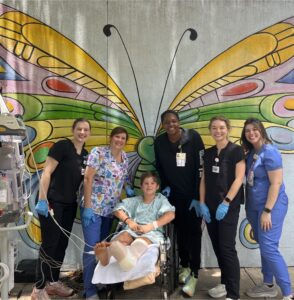 It was then that the pediatric surgeon told Ali and Bubba Delukie that it was likely he would have to amputate their son’s foot. They told him, “Do what you need to do. Go take care of our kid.”
“Four hours later, Brigg was out of surgery again and he still had a foot,” Ali said. “They took a vein out of his right leg and grafted it into his left leg. We were told that Dr. Sachanandani tried four times before he was successful in obtaining blood flow. I’m so grateful that they refused to give up on my son’s foot.”
The first few days were rough, with the doctors watching the pulse closely to make sure the blood was still flowing to Brigg’s foot through the grafted vessel. In addition, the soft tissue wounds took longer to heal than usual because of the effects of the blood thinner. But after a month in ICU and then more time in a regular room, Brigg was finally able to go home, though he would need to use a wheelchair for several months afterward.
Brigg recently finished almost a year of physical therapy and is now back to playing soccer, his favorite sport. The 13-year-old is grateful to the medical personnel who took such good care of him and always makes sure he wears his seat belt now when he rides an ATV.
Unfortunately, McLane Children’s has seen a large spike in ATV-related accidents. Although they are not a leading cause of traumatic injuries in children, they are at the top of the list for causing severe injury. Stagg encourages parents to supervise their children while are they riding ATVs and require that kids wear a helmet and seat belt. Driving an ATV in inclement weather or on an incline is also a recipe for disaster, especially with a child behind the steering wheel.
“The odds were pretty high that Brigg would lose his foot as a result of this accident,” Stagg said. “Although kids have a great ability to heal, Brigg’s case was truly a medical miracle. There were lots of answered prayers.”