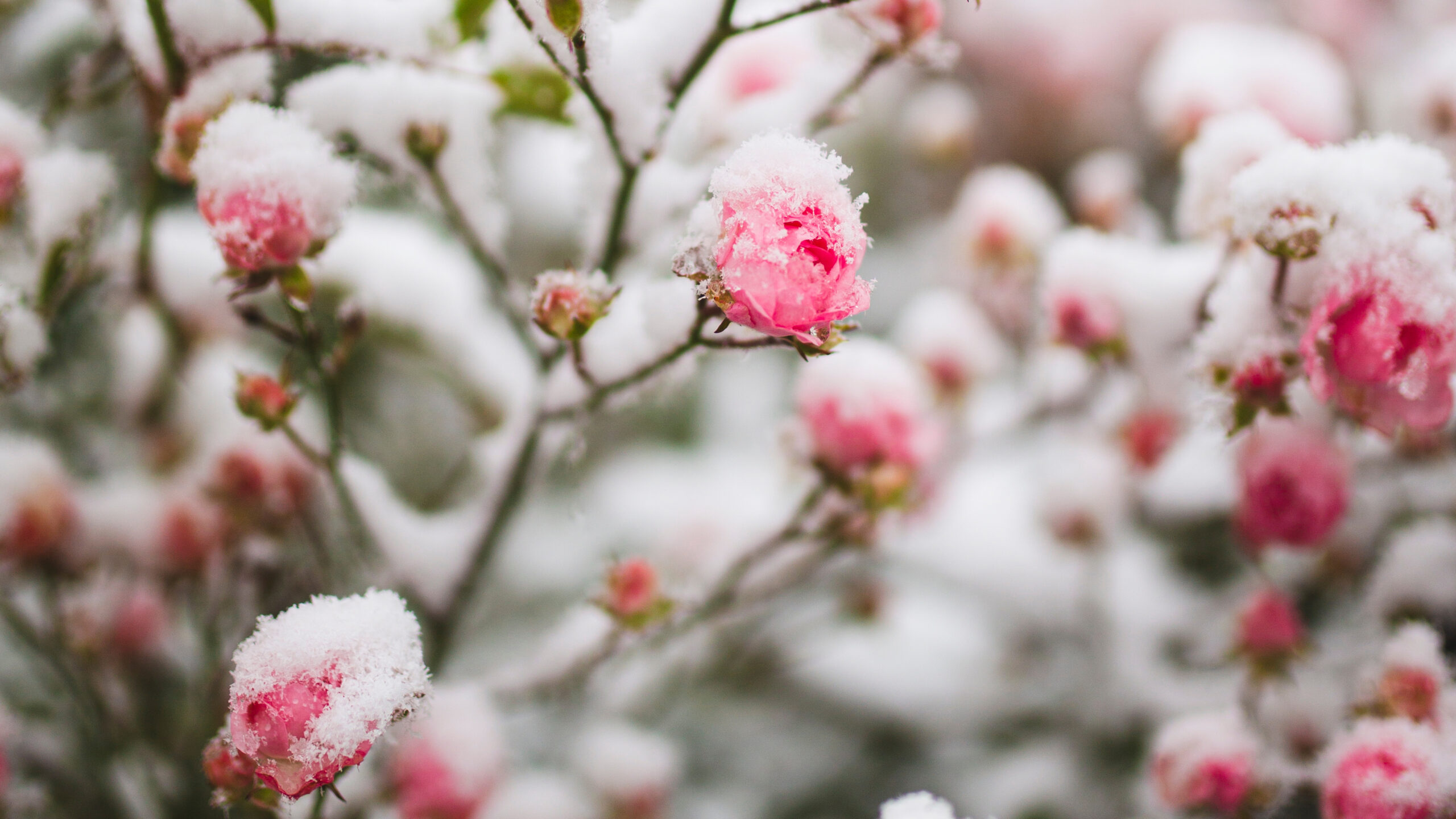
Ode to a Garden in Winter
Poetry shares beauty of cooler seasons
By Amy Rognlie | Photo licensed from Adobe Stock, iMarzi
 In English class the other day, I tasked my eighth graders with writing haiku poems. If you are not familiar with haiku poems, the standard form is five syllables, seven syllables, then five syllables, traditionally written about nature. I decided to try my hand at composing one while my students were working on theirs, and of course, what better subject to wax poetic upon than my garden? So with three and a half minutes of thought and lots of counting syllables on my fingers, this is what I came up with:
Turk’s Cap blooming pink.
Canna leaves curling and brown.
Garden in the fall.
Pretty remarkable, huh? Not so much, but take my word for it — this lowly haiku about the garden was tremendously better than the one I dashed off about my dog in the previous class period. My students weren’t impressed with that one at all for some strange reason.
Anyway, this little exercise in poetry writing spurred me to hunt for poems about gardens in the autumn and winter, and I was pleasantly surprised to discover some that I hadn’t read before. I hope you enjoy them as much as I did!
This is a passage from “The Months: A Pageant” by Christina Rossetti.
Crack your first nut and light your first fire,
Roast your first chestnut crisp on the bar;
Make the logs sparkle, stir the blaze higher,
Logs are cheery as sun or as star,
Logs we can find wherever we are.
Spring one soft day will open the leaves,
Spring one bright day will lure back the flowers;
Never fancy my whistling wind grieves,
Never fancy I’ve tears in my showers;
Dance, nights and days! and dance on, my hours!
I also loved this excerpt from “The Garden in Winter” by Lucy Maud Montgomery, author of the classic novel, Anne of Green Gables.
Though the winds are keen and chill
Roses’ hearts are beating still,
And the garden tranquilly
Dreams of happy hours to be.
In the summer days of blue
All its dreamings will come true.
“Talking in Their Sleep” is a lovely poem by Edna M. Thomas, an American poet who lived in the 1800s. This poem personifies an apple tree, a seed, and a perennial flower.
“You think I am dead,”
The apple tree said,
“Because I have never a leaf to show—
Because I stoop,
And my branches droop,
And the dull gray mosses over me grow!
But I’m still alive in trunk and shoot;
The buds of next May
I fold away—
But I pity the withered grass at my root.”
“You think I am dead,”
The quick grass said,
“Because I have parted with stem and blade!
But under the ground
I am safe and sound
With the snow’s thick blanket over me laid.
I’m all alive, and ready to shoot,
Should the spring of the year
Come dancing here—
But I pity the flower without branch or root.”
“You think I am dead,”
A soft voice said,
“Because not a branch or root I own.
I never have died,
But close I hide
In a plumy seed that the wind has sown.
Patient I wait through the long winter hours;
You will see me again—
I shall laugh at you then,
Out of the eyes of a hundred flowers.”